Thursday, January 6, 2011

Jan. 6: Kathy Sledge of Sister Sledge is 52 today.


Born in Philadelphia, Pennsylvania, and the granddaughter of former opera singer Viola Williams, Kathy Sledge along with her three sisters, Debra, Joni and Kim, enjoyed many pop, R&B and disco hits. Their group, named "Sister Sledge," had several hits on the Hot Dance Music chart, including "Take Me Back To Love Again," which hit #1 in 1992.


Kathy sang lead on Sister Sledge's hits "He's the Greatest Dancer," "We Are Family," "Lost in Music," "Got to Love Somebody," "Reach Your Peak," "All American Girls," "My Guy," and "B.Y.O.B. (Bring Your Own Baby)."


Kathy Sledge returned to the dance chart in 2001 as a featured vocalist for King Britt's musical project Sylk 130 on the track "Rising."

The Sledge sisters starting singing in church as "Mrs. Williams' Grandchildren" in Philadelphia. Debra was the first to start school. After she joined the glee club, she come back home and taught harmony to her sisters. Sister Sledge started performing professionally in their teens. In 1971, they released their first single, under their newly coined name, Sisters Sledge.


A few years later, Sister Sledge signed with Atlantic Records' Atco subsidiary. The quartet was teamed with the hit production duo of former Main Ingredient Tony "Champagne" Sylvester and Bert "Super Charts" DeCoteaux who produced hits for Ben E. King.


Their first major label singles, "Love Don't Go Through No Changes On Me" from their debut album Circle of Love was a hit, making it to number 31 R&B in late 1974. In the group's album cover photo, a teenage, pig-tailed Kathy is all smiles.


(Continued below video and Amazon portals ...)


(Press album cover for direct link to the entire Amazon Website):
Circle of Love


Despite her tender age, on the album's ballads, "Cross My Heart," "Don't You Miss Him," and "You're Much Better Off Loving Me," there are hints of the earthy, sexiness that Kathy would later exhibit on later recordings.


The album tracks, the popular dance tune "Circle Of Love" and the touching Joni-lead Thom Bell/Linda Creed composed ballad "Give Into Love" received substantial radio airplay.


After being transferred to Atlantic's Cotillion label, Sister Sledge worked with Michael Kunze and Sylvester Levay, the producers of Silver Convention who wrote most of the songs for their 1977 LP, Together.

Kathy co-wrote with keyboardist Don Freeman "Do the Funky Do," wrote the sambo-flavored, acoustic guitar-laced groover "Can't Mess Around With Love," and lead the group through an up-tempo version of Steve Wonder's 1967 smash "I Was Made to Love Him."  Another Wonder tune, "As" was sped up by the sisters and received considerable radio airplay.

The hit songwriting-production duo of guitarist Nile Rodgers and bassist Bernard Edwards of Atlantic Records act Chic were told by Atlantic that they could work with any artist at the label. They chose Sister Sledge. Their first single together was "He's the Greatest Dancer," which hit number one R&B and number two pop on Billboard's charts in spring 1979.


Then they hit the big time. "We Are Family," the title track of Sister Sledge's third album, had already received massive dance club and radio play when it was issued as a single, giving the group their first and only certified gold single going to number one R&B and number two pop in summer 1979. The track was adopted by the 1979 World Series-winning Pittsburgh Pirates and numerous other organizations, and it became a standard tune for family reunions. The We Are Family LP went platinum, peaking at number three pop in spring 1979.


The Rodgers/Edwards-produced follow-up LP Love Somebody Today boasted the singles: "Got to Love Somebody" b/w "Good Girl Now" (number six R&B), the perky "Reach Your Peak," and "Let's Go on Vacation." The title track to their 1981 LP All American Girls went to number three R&B in early 1981.


In 1992, Kathy Sledge signed with Epic Records as a solo artist. The album, Heart, featured the singles "Take Me Back to Love Again" and the ballad "All of My Love." "Take Me Back..." was a huge dance club hit. The album's title track was released as a single and also became a dance hit. After she left Epic, Sledge recorded several dance hits on independent and foreign labels.


Kathy continued to perform with her sisters and and they recorded the album African Eyes in 1998 as well as the Live in Concert album in 1997.

In 2004 they headlined the International Food and Wine Festival at the Epcot theme park. In 2003, Debbi and Joni performed with two other female singers in the PBS special, "My Music: 70's Soul Superstars."

 Sister Sledge's most popular songs have been re-released several times in the UK, often in newly-remixed versions which keep them sounding new and up-to-date.

####


Tuesday, January 4, 2011

Jan. 4: Soul singer Arthur Conley, "Sweet Soul Music" was born on this date in 1946...

... he died on November 17, 2003.


Conley was born in McIntosh County, Georgia and grew up in Atlanta. He first recorded in 1959 as the lead singer of Arthur & the Corvets. They released three singles in 1963 and 1964, "Poor Girl," "I Believe" and "Flossie Mae" on the Atlanta based record label, National Recording Company.

In 1964, he moved to a new label, Baltimore's Ru-Jac Records, and released "I'm a Lonely Stranger." When Otis Redding heard this, he asked Conley to record a new version, which was released on Redding's own fledgling label Jotis Records, as only its second release.

(Continued below video and Amazon portals ...)


(Press album cover for direct link to the entire Amazon Website):

Platinum Collection

Conley met Redding in 1967, and Redding taught him the finer points of the music industry. Together they re-wrote the Sam Cooke song "Yeah Man" into "Sweet Soul Music," which, at Redding's insistence, was released on the Atco-distributed label Fame Records, and was recorded at FAME studios in Muscle Shoals, Alabama. It proved to be a huge hit, going to the number two position on the U.S. charts and the Top Ten across much of Europe.

"Sweet Soul Music" sold over one million copies, and was awarded a gold disc.

After several years of singles in the early 1970s, Arthur relocated to England in 1975, and spent several years in Belgium, then settled in Amsterdam, Netherlands in spring 1977. In the beginning of 1980 he had some major performances as Lee Roberts and the Sweaters in the Ganzenhoef, Paradiso, De Melkweg and the Concertgebouw, and was highly successful.

At the end of 1980 he moved to the Dutch village of Ruurlo and legally changed his name to Lee Roberts (his middle name and his mother's maiden name). There he promoted his music by through his Art-Con Productions company.

Amongst the bands he promoted was the heavy metal band Shockwave from the Hague. Arthur was also active as a designer of specialized tapestries and furniture.

A live performance on January 8, 1980, featuring Lee Roberts & the Sweaters, was released as an album entitled Soulin' in 1988.

Arthur Conley died after a long battle with intestinal cancer in Ruurlo, Netherlands at the age of 57 in November 2003.

####

Jan. 4: Country music singer Patty Loveless is 54 today.


Born Patty Lee Ramey in Pikeville, Kentucky and raised in Louisville, Patty Loveless emerged on the country music scene in late 1986 with her first self-titled album. She became a star due to her unique blend of honky tonk and country-rock, coupled with an emotional ballad style.

Her late-1980s records earned her comparisons to Patsy Cline. Most critics agree she truly came into her own as an artist in the early 1990s.

Throughout her career, Loveless has been one of the most popular female singers of the Neo-traditional country movement, although she has also recorded Country, pop and Bluegrass albums.

Loveless, who is a distant cousin of Country music legends Loretta Lynn and Crystal Gayle, has charted more than forty singles on the Billboard Hot Country Songs charts, including five Number Ones.

Patty has recorded fourteen studio albums. In the U.S. four of these albums have been certified platinum, while two have been certified gold. She is the 65th member of the Grand Ole Opry.


(Continued below video and Amazon portals ...)


(Press album cover for direct link to the entire Amazon Website):
Mountain Soul


Patty's father was a coal miner, Her older sister, Dottie Ramey, was an aspiring country singer, and performed often at clubs in Eastern Kentucky, with her brother Roger Ramey. They performed under the stage name, "The Swinging Rameys." Traveling with Dottie and Roger to Fort Knox in 1969, and hearing her sister perform on stage, Patty Ramey decided that she would like to become a performer as well.


When her sister Dottie married in 1969 and quit performing, Roger Ramey convinced Patty to perform onstage for the first time at a small country jamboree in Hodgenville, Kentucky called the "Lincoln Jamboree." She was terrified at first, but grew more confident during the evening. The five dollars she was paid that night was the first money she ever earned.

Patty and Roger started singing together at several clubs in Louisville Kentucky, under the name "Singin' Swingin' Rameys." A local radio announcer, Danny King with a country radio station in Louisville was a big supporter of the Ramey act.


Roger moved to Nashville in 1970 and became a producer with The Porter Wagoner Show. Patty followed her brother a year later. Roger took Patty to Wagoner's office and introduced her. Roger was able to convince Wagoner to listen to his sister sing, and she performed a song she wrote for their father, John, called "Sounds of Loneliness." Wagoner agreed to help her out. Wagoner introduced them to his singing partner at the time, Dolly Parton, and invited her to travel with him and Dolly Parton on weekends during the summer.

In 1973 Bill Anderson, Connie Smith, the Wilburn Brothers, and Jean Shepard were scheduled to appear in a touring Grand Ole Opry show in Louisville Gardens. However, Jean Shepard was caught in a flood, and she wasn't able to make it in. Danny King arranged for Patty and Roger to replace her.

The Wilburn Brothers listened to Patty Ramey and Doyle Wilburn invited her to work with their band to replace their female singer, to which Patty Ramey agreed. Between 1973 and 1975 Patty Ramey traveled with the Wilburns on weekends and during the summers when school was out.

After graduation from High School in Louisville, Kentucky, in 1975 Patty Ramey became a full-time member of the Wilburn Brother's band as their lead female singer. About this time she met the Wilburn's new drummer, Terry Lovelace. When Dolyle Wilburn learned about their romantic relationship, he told Patty to break it off. Instead, Patty quit the Wilburns and left with her boyfriend for western North Carolina. In early 1976, she married Terry Lovelace and began performing with him in a pickup-band based in Kings Mountain.

In North Carolina, Patty and her husband Terry played in a circuit of small bars and concert halls. She sang covers of late 70's rock songs. (She eventually changed her stage name to "Loveless" instead of "Lovelace" so as not to be confused with a porn actress with a similar name.)

In the early '80s, after she and her husband separated, Patty returned home and hired her brother Roger as her manager. After traveling to Nashville to record demos of country songs, she landed a publishing deal with Acuff-Rose and moved to Nashville permanently in 1985. Her demo tape impressed MCA exec Tony Brown enough that he offered her a contract later that year.


Loveless released her first chart single, "Lonely Days, Lonely Nights," and her self-titled debut album in 1986. She enjoyed some modest success, but didn't really make a splash until the 1988 follow-up, If My Heart Had Windows, which gave her two Top Ten hits with the title song and "A Little Bit of Love."


In 1988, she released the follow-up album that made her a star, Honky Tonk Angel. "Timber, I'm Falling in Love" became her first number one hit in 1989, and three more singles - "Blue Side of Town," "Don't Toss Us Away," and "The Lonely Side of Love" - reached the Top Ten before year's end, by which time Loveless had married her producer Emory Gordy, Jr.. In 1990, the album's fifth single, "Chains," became her second number one.


Her next album, On Down the Line, came out later that year and brought her two Top Five hits in the title cut and "I'm That Kind of Girl." Following 1991's Up Against My Heart and its Top Five hit "Hurt Me Bad (In a Real Good Way),"


Loveless made some major changes in her career. She parted ways with her brother as manager and switched labels to Epic, taking husband Gordy with her as producer; moreover, she was forced to undergo throat surgery to repair her vocal cords before she was able to complete her label debut.


Only What I Feel was released in early 1993 and earned Loveless the best reviews of her career to date. The number one hit "Blame It on Your Heart" helped the record go platinum, and "How Can I Help You Say Goodbye?" and "You Will" also went Top Ten.

The following year's When Fallen Angels Fly won equal acclaim, not to mention the CMA's Album of the Year Award; it spun off four Top Ten hits in "I Try to Think About Elvis," "Halfway Down," "You Don't Even Know Who I Am," and "Here I Am."

Released in 1996, The Trouble with the Truth continued Loveless' renaissance with two more number one smashes, "You Can Feel Bad (If It Makes You Feel Better)" and "Lonely Too Long," and the Top Five "She Drew a Broken Heart"; that year, she won the ACM's Female Vocalist of the Year Award. However, 1997's Long Stretch of Lonesome didn't fare as well; none of its singles made the Top Ten.

In response, Loveless changed course and embraced the acoustic Kentucky bluegrass of her youth, which was enjoying a renaissance of its own thanks to the movie,  O Brother, Where Art Thou? The result, Mountain Soul, was released in 2001 and earned numerous critical plaudits, also selling decently in spite of its lack of concern for commercialism. Loveless kept that acoustic approach for her 2002 holiday album Bluegrass and White Snow: A Mountain Christmas, and it also informed her proper follow-up, 2003's On Your Way Home. The ambitious Dreamin' My Dreams appeared two years later.

After her release from Sony Nashville, in 2006 Loveless sang a duet with Bob Seger on his Face the Promise album, also collaborating with Solomon Burke on his Nashville album and performing a duet, "Out Of My Mind," with Vince Gill on his album These Days.

She took a two-year sabbatical from touring in 2006 and 2007 though she & Gordy performed several times at the Grand Ole Opry and did a couple of guest appearances at other shows.

Returning to the studio in 2008, Loveless appeared on a track on George Strait's Troubadour album, as well as a track on Jimmy Wayne's Do You Believe Me Now. Later in 2008, Loveless signed a recording contract with Saguaro Road Records, and recorded a tribute album, Sleepless Nights, which was released on September 9. Sleepless Nights received a Grammy Award nomination for Best Country Album.

In 2009, Loveless followed up Mountain Soul with Mountain Soul II. Unlike its predecessor, II contained classic country, mountain, and bluegrass songs, as well as original material instead of strictly bluegrass tunes.

Loveless is scheduled to be inducted into The Kentucky Music Hall of Fame on April 7, 2011.

####

Jan. 4: Michael Stipe, lead singer for R.E.M. "Man on the Moon," is 51 today.


Born in Decatur, Georgia in 1960, John Michael Stipe is recognized for his complex lyrics and R.E.M.s' visual image. His interests extend outside of the music industry. He runs his own film production companies, C-00 and Single Cell Pictures. Of course, he is best known for being the lead singer of R.E.M., the alternative rock band from Athens Georgia.

Because his father was in the military, the Stipe family moved frequently when he was growing up, including a stint in Germany. Stipe said he was greatly influenced by Patti Smith's Horses album, Television's Marquee Moon and Wire's Pink Flag. During high school in Illinois, he joined a punk cover band. After graduating, Stipe enrolled at the University of Georgia in Athens, Georgia, as an art major, studying photography and painting.

While attending college, Stipe often visited the Wuxtry record shop where he met store clerk Peter Buck in 1980. The two became friends, started writing music together and decided to form a band. At the time, Stipe was already in a local band named Gangster. Stipe and Buck were joined by Bill Berry and Mike Mills and named themselves R.E.M., a name Stipe selected at random from a dictionary.


(Continued below video and Amazon portals ...)


(Press album or MP3 cover for direct link to the entire Amazon Website):


Collapse into NowIn Time: The Best Of R.E.M., 1988-2003

-----
All four members of R.E.M. dropped out of school in 1980 to focus on the band. The band's debut single, "Radio Free Europe," was a college radio success and the band signed to I.R.S. Records for the release of the Chronic Town EP one year later.

R.E.M. released its debut album Murmur in 1983, which was popular and acclaimed by critics. Stipe's vocals and lyrics received particular attention from listeners. Murmur went on to win the Rolling Stone Critics Poll Album of the Year over Michael Jackson's Thriller.

The band's second album, Reckoning, followed in 1984. Despite little mainstream airplay, Reckoning reached the Top 30 and with the darkly beautiful follow-up Fables of the Reconstruction, the band earned increasing MTV visibility for the videos "Can't Get There From Here" and "Driver 8."

In 1985, R.E.M. traveled to England to record Fables of the Reconstruction. After the album was released, relationships were tense within the band. Stipe said of the period, "I was well on my way to losing my mind." Stipe gained weight and his behavior became more eccentric; he shaved his hair into a monk's tonsure.

Following the tour to promote their album Green, in 1988 R.E.M. took an extended break, during which Stipe focused on his film company C-00, produced material for local discoveries like Vic Chesnutt and the Chickasaw Mudd Puppies, and lent guest vocals to a variety of projects.

R.E.M. returned in 1991 with the chart-topping Out of Time, which generated the Top Ten hits "Losing My Religion" and "Shiny Happy People"; Automatic for the People followed and as alternative rock took over the pop charts, the band  was widely acknowledged among the chief inspirations behind a generation of new artists.

While touring in support of 1995's Monster, Stipe was temporarily sidelined by hernia surgery; he returned to complete the tour and two years later, R.E.M. resurfaced with New Adventures in Hi-Fi.

With the success of the albums Out of Time and Automatic for the People in the early 1990s, R.E.M. became mainstream music stars. In 1994, with questions still being raised about his sexuality, Stipe described himself as "an equal opportunity letch," and said he did not define himself as gay, straight, or bisexual, but that he was attracted to and had relationships with both men and women. In 1995 he appeared on the cover of Out magazine. Stipe described himself as a "queer artist" in Time in 2001 and revealed that he had been in a relationship with "an amazing man" for three years at that point.

Stipe has thrived on collaborating with musical artists he admires. He had planned a collaboration with Nirvana's Kurt Cobain in 1994, partly in an attempt to lure Cobain away from his home and his drug addiction, but did not manage to compose or record anything before Cobain's death. Stipe was chosen as the godfather of Kurt Cobain and Courtney Love's daughter, Frances Bean Cobain.

Stipe was once very close to fellow singer Natalie Merchant and has recorded a few songs with her, including one titled "Photograph" which appeared on a pro-choice benefit album titled Born to Choose and they have appeared live with Peter Gabriel singing Gabriel's single "Red Rain."

Stipe and Tori Amos became friends in the mid 1990s and recorded a duet in 1994 called "It Might Hurt a Bit" for the Don Juan DeMarco motion picture soundtrack. Both Stipe and Amos decided to keep it in the vaults, though it was later slated to appear on the Empire Records motion picture soundtrack in 1995. The song remains unreleased and unheard.

In 1998, Stipe published a collection called Two Times Intro: On the Road with Patti Smith.

Through some changes in musical style, the band continued its career into the next decade with mixed critical and commercial success. In 2006, Stipe released an EP that comprised six different cover versions of Joseph Arthur's "In The Sun" for the Hurricane Katrina disaster relief fund. One version, recorded in a collaboration with Coldplay's Chris Martin, reached number one on the Canadian Singles Chart.

Also in 2006, Stipe appeared on the song "Broken Promise" on the Placebo release Meds. Continuing his non-R.E.M. work in 2006, Stipe sang the song "L'Hôtel" on the tribute album to Serge Gainsbourg titled Monsieur Gainsbourg Revisited and appeared on the song "Dancing on the Lip of a Volcano" on the New York Dolls album One Day It Will Please Us to Remember Even This.

In 2007, R.E.M. was inducted into the Rock and Roll Hall of Fame.


####

Monday, January 3, 2011

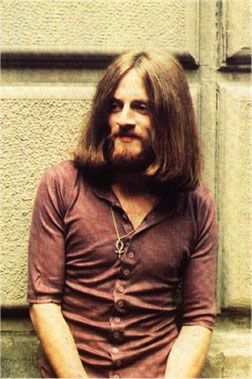
Jan. 3: John Paul Jones of Led Zeppelin "Stairway to Heaven," "Whole Lotta Love, is 65 today.


Born John Baldwin in 1946, in London, England, John Paul Jones was a founding members of the legendary group Led Zeppelin. He is remembered and revered as an innovative musician, arranger, and director.


In addition to bass and keyboards, Jones also plays guitar, koto, lap steel guitars, autoharp, violin, ukulele, sitar, cello, continuum and the three over-dubbed recorder parts heard on Led Zeppelin's "Stairway to Heaven."


He started playing piano at age six, learning from his father, Joe Baldwin, a pianist and arranger for big bands in the 1940s and 1950s. His mother was also in the music business which allowed the family to often perform together touring around England.


In 1960, when Jones was only 14 years old, he became a member of his father's dance band. A year later Jones formed his first band, and by the next year he began to travel and perform professionally.

Jones joined his first band, The Deltas, at 15. He then played bass for a jazz-rock London group, Jett Blacks. His first big break came in 1962 when he was hired by Jet Harris and Tony Meehan of the successful British group The Shadows for a two-year period. Shortly before hiring Jones, Harris and Meehan had just had a Number 1 hit with "Diamonds" - a track on which Jones' future bandmate Jimmy Page had played.


(Continued below video and Amazon portals ...)


(Press album cover for direct link to the entire Amazon Website):
Led Zeppelin


In 1964, Jones began studio session work with Decca Records. From then until 1968, he played on hundreds of recording sessions. He soon expanded his studio work by playing keyboards, arranging and undertaking general studio direction, resulting in his services coming under much demand.

He worked with numerous artists including the Rolling Stones on Their Satanic Majesties Request, Herman's Hermits; Donovan, Jeff Beck, Françoise Hardy, Cat Stevens, Dusty Springfield, Rod Stewart, Shirley Bassey, Lulu and many other musicians. Jones has stated that, as a session musician, he was completing two and three sessions a day, six and seven days a week.

It was during his time as a session player that Jones adopted the stage name John Paul Jones. This name was suggested to him by a friend, Andrew Loog Oldham, who had seen a poster for the film John Paul Jones in France.


During his time as a session player, Jones often crossed paths with guitarist Jimmy Page, a fellow session veteran. In June 1966, Page joined The Yardbirds, and in 1967 Jones contributed to that band's Little Games album.

The following winter, during the sessions for Donovan's The Hurdy Gurdy Man, Jones expressed to Page a desire to be part of any projects the guitarist might be involved in, Later that year, The Yardbirds disbanded, leaving Page o complete some previously booked Yardbirds dates in Scandinavia. Jones, at the suggestion of his wife, enquired to Page about joining him on the tour, and Jones accepted.

Vocalist Robert Plant and drummer John Bonham joined the two to form a quartet. Initially dubbed the "New Yardbirds" for the Scandinavian dates, the band soon became known as Led Zeppelin.


In less than a dozen years, Jones, as a member of Zeppelin, made one movie, recorded nine full-length albums and completed close to 30 extensive tours.


The cultural impact of Led Zeppelin, both artistically and musically, is unquestioned. Jim Miller, editor of Rolling Stone Illustrated History of Rock & Roll, has said "On one level, Led Zeppelin represents the final flowering of the sixties' psychedelic ethic, which casts rock as passive sensory involvement."


Since Led Zeppelin dissolved in 1980 with the death of Bonham, Jones has collaborated with a number of artists, including R.E.M., Jars of Clay, Heart, Ben E. King, Peter Gabriel, Foo Fighters, Cinderella, The Mission, La Fura dels Baus, Brian Eno, the Butthole Surfers and Uncle Earl.
He appeared on several sessions and videos for Paul McCartney and was involved in the soundtrack of the film Give My Regards to Broad Street.

In 1985, Jones was asked by director Michael Winner to provide the soundtrack for the film, Scream for Help, with Jimmy Page appearing on two tracks. Jones provides vocals for two of the songs. He recorded and toured with singer Diamanda Galás on her 1994 album, The Sporting Life.  Jones set up his own recording studio called Sunday School, as well being involved in his daughter's (Jacinda Jones) singing career. He also recorded a solo debut album, Zooma.


During the 2000s he kept busy in both studio and live settings - producing many other artists. He also participated in the 2007 Led Zeppelin reunion show at O2 Arena, and in 2009 began playing with Dave Grohl (Foo Fighters) and Josh Homme (Queens of the Stone Age) in the supergroup Them Crooked Vultures. The band released its debut album later that year.

####

Jan. 3: Stephen Stills,with Buffalo Springfield, Crosby, Stills & Nash (and Young) is 66 today.


Stills was ranked #28 in Rolling Stone Magazine's 2003 list of "The 100 Greatest Guitarists of All Time."

------


Stephen Stills was raised in a military family, and lived in many places as a child; Gainesville and Tampa, Florida, Louisiana, Costa Rica and the Panama Canal Zone. Along the way, he developed a love for the blues, folk and Latin music.

Stills dropped out of the University of Florida to pursue a music career in the early 1960s. He played in a series of unsuccessful bands including The Continentals, which featured future Eagles guitarist Don Felder.

He eventually ended up in a nine-member vocal harmony group, the house act at the famous Cafe Au Go Go in NYC, called the Au Go Go Singers which also included future bandmate in Buffalo Springfield Richie Furay. The group released one album in 1964, shortly before parting ways.

Afterwards, Stills, along with four other former members of the Au Go Go Singers formed The Company, a folk/rock group. The Company broke up in New York within four months. Stills did session work and went to various auditions (including an unsuccessful attempt to become one of The Monkees). In 1966 he convinced a reluctant former Au Go Go Singer, Richie Furay, then living in Massachusetts, to move with him to California.

Stills, Furay, and Neil Young - who Stills met when The Company toured Canada - formed the core of Buffalo Springfield. The band would release three albums (Buffalo Springfield, Buffalo Springfield Again, and Last Time Around) and one hit single (Stills' "For What It's Worth") before disbanding.

Stills' guitar playing continually evolved. Early on, he played recognizable rock and roll, blues, Latin, and country music. He then added mimicked some of the sounds he learned from his friend Jimi Hendrix. He has also been known to experiment; including soaking strings in barbecue sauce or flipping pickups to mimic Hendrix playing a right-handed guitar left-handed. He is also known for using unconventional tunings, particularly when performing acoustically.

Stills also plays piano, organ and bass and plays some drums. He played nearly every instrument on Crosby, Stills and Nash, earning the nickname Captain Manyhands from Rolling Stone.

After Buffalo Springfield split up, Stills joined up with ex-Byrd David Crosby and ex-Hollie Graham Nash to form the super-group Crosby, Stills & Nash. They teamed up after Cass Elliot invited Graham Nash over to meet Stills and David Crosby at the home of well known folk musician and painter Joni Mitchell. (Mitchell painted several artworks of the three. She also contributed the artwork seen on the cover of the 1974 CSNY collection album So Far.)

 
(Continued below video and Amazon portals ...)


(Press album cover for direct link to the entire Amazon Website):

Stills Alone

-----
Stills overdubbed much of the musical backing himself for the first Crosby, Stills, and Nash album with only Dallas Taylor's drums and some rhythm guitar from Crosby and Nash. Neil Young was added for their second album, and the group became Crosby, Stills, Nash, and Young. Despite several breakups and reformations, CSN (and sometimes CSNY) still record and tour to this day.

Having played at the Monterey Pop Festival with Buffalo Springfield, and both Woodstock and Altamont with CSNY, Stills performed at all three of the iconic U.S. rock festivals of the 1960s.

In the wake of CSNY's success, all four members recorded solo albums. In 1970, Stills released his self-titled album, which also featured Eric Clapton, Jimi Hendrix, Cass Elliot, Booker T Jones and Ringo Starr (credited only as "Richie") as well as contributions from various members of the CSNY band. It provided Stills with the hit single "Love The One You're With."

Stills followed this with Stephen Stills 2, which featured "Change Partners." The next year, Stills teamed up with ex-Byrd Chris Hillman and several CSNY sidemen to form the band Manassas. With Manassas Stills recorded the self-titled double album. The album was a mixture of blues, folk and Latin music divided into different sections.

After a tour in France, he switched to Columbia Records, where he recorded two albums: Stills in 1975 and Illegal Stills.
In 1976, Stills attempted a reunion with Neil Young. At one point, Long May You Run was slated to be a CSNY record, but when Crosby and Nash left to fulfill recording and touring obligations, according to both David and Graham they deleted their vocals, and Stills and Young decided to go on as The Stills-Young Band. However, Young would leave midway through the resulting tour due to an apparent throat infection.

Stills reunited with Crosby and Nash shortly afterwards, thanks to the efforts of Nash's future wife Susan, who got Nash to forgive Stills for wiping the Crosby and Nash vocals from Long May You Run. This led to the semi-permanent CSN reunion of 1977, which has persisted even though all three have released solo records since then.


Although Crosby, Stills, Nash, and Young had difficulties with their differing individual goals, egos, and musical styles, in the early 1983 Daylight Again DVD from the 1982 CSN tour, Stills introduced the song, "Wasted on the Way", commenting that there were "three buddies who didn't know how to talk to one another for years"... finally 'making friends' getting rich, and it being good."

In 1997, Stills became the first person to be inducted into the Rock and Roll Hall of Fame twice in the same night for his work with CSN and the Buffalo Springfield. Fender guitars crafted a custom guitar and presented it to Stills to commemorate the occasion, this Fender Telecaster style guitar bears an inscription on the neck plate.

In 2005, Stills release Man Alive!, his first solo offering in 14 years. Throughout 2006 and 2007, Stills toured regularly as a solo artist with "The Quartet", which consisted of drummer Joe Vitale, Mike Finnegan or Todd Caldwell on keyboards, and Kevin McCormick or Kenny Pasarelli on bass. Stills toured Europe as a solo artist for the first time during October 2008.

####