Sunday, February 6, 2011

Feb. 6: 1950's-60's teen idol Fabian is 68 today.


Born in Philadelphia, Pennsylvania, Fabiano Anthony Forte rose to national prominence after performing several times on American Bandstand. Eleven of his songs reached the Billboard Hot 100 listing.

Fabian was discovered in 1957 by Bob Marcucci and Peter DeAngelis, owners of Chancellor Records. At the time, record producers were looking to the South Philadelphia neighborhoods in search of teenage talents with good looks, and Frankie Avalon, also of South Philly, suggested Fabian as a possibility.

Fabian was the oldest of three brothers, and with his father, a former policeman ill and unable to work, he hoped to earn enough for his family. At fifteen, Fabian won the Silver Award as "The Promising Male Vocalist of 1958."

With songwriters Doc Pomus and Mort Shuman, Fabian released a series of hit singles for Chancellor Records including "I'm a Man," "Hound Dog Man," a #9 hit in the U.S., "Turn Me Loose," and his biggest hit, "Tiger," which reached number 3 in the U.S. charts. Other singles that charted included "String Along," "About This Thing Called Love" and "This Friendly World."

His career in music basically ended after he bought out of his contract with Marcucci after signing a seven-year contract with 20th Century Fox. During the payola scandal of the 1960s, Fabian testified before Congress that his recordings had been doctored electronically to significantly improve his voice.


(Continued below video and Amazon portals ...)


(Press album cover for direct link to the entire Amazon Website):
Best of

-----


"Acting" With Veronica Cartwright

Fabian was contracted to 20th Century Fox beginning with Don Siegel's Hound-Dog Man. He appeared in more than 30 films, including Five Weeks in a Balloon, High Time, Ten Little Indians, North to Alaska, The Longest Day and Ride the Wild Surf and Peter Brown. Most of his early films were comedies, and cast him as a restless teenager with a penchant for singing.
After 1965 his film and singing career began to fade, along with his popularity as a teen idol.

He made several films for American International Pictures, including portraying Pretty Boy Floyd in A Bullet for Pretty Boy. He also played Josh Ashley in Little Laura and Big John in 1973.


Forte never regained his teenage popularity, but has continued performing for more than forty years. Recently he has been appearing with Frankie Avalon and Bobby Rydell to perform concerts as "The Golden Boys."

With Frankie Avalon & Bobby Rydell


In his latest endeavor, Fabian hosts and headlines in the hit show "The Original Stars of Bandstand" at The Dick Clark Theater in Branson, Missouri. The show stars Fabian and Bobby Vee and features The Chiffons, Brian Hyland, Chris Montez and rare footage of the performers and Dick Clark.


####

Feb. 6: Bob Marley was born on this date in 1945...


... he died on May 11, 1981.


-----
Did you know?


in the mid-1960s, Bob Marley worked briefly as a DuPont lab assistant and on the assembly line at a Chrysler plant, under the name Donald Marley.

His final words to his son Ziggy were "Money can't buy life."
-----

Nesta Robert Marley was born in the village of Nine Mile in Saint Ann Parish, in Jamaica, West Indies. A Jamaican passport official swap his first and middle names and he became Robert Marley - but best known as Bob.

His father, Norval Sinclair Marley, was a white Jamaican of English descent whose family came from Essex, England. Norval was a captain in the Royal Marines, as well as a plantation overseer, when he married Cedella Booker, an Afro-Jamaican then 18 years old.

Although Marley recognised his mixed ancestry, he identified himself as a black African, following the ideas of Pan-African leaders. His two biggest influences were the African-centered Marcus Garvey and Haile Selassie. A central theme in Bob Marley's message was the repatriation of black people to Zion, which in his view was Africa, particularly Ethiopia.


In his early teens, Marley started to play music with Neville "Bunny" Livingston - AKA Bunny Wailer. He left school at the age of 14 to make music with Joe Higgs, a local singer and devout Rastafari. At a jam session with Higgs and Livingston, Marley met Peter McIntosh - later known as Peter Tosh. In 1962, Marley recorded his first two singles, "Judge Not" and "One Cup of Coffee," which attracted little attention. The songs were later re-released on the box set Songs of Freedom, a posthumous collection of Marley's work.

In 1963, Bob Marley, Bunny Wailer, Peter Tosh, Junior Braithwaite, Beverley Kelso, and Cherry Smith formed a ska and rocksteady group, calling themselves "The Teenagers." They later changed their name to "The Wailing Rudeboys," then to "The Wailing Wailers" - at which point they were discovered by record producer Coxsone Dodd - and finally to "The Wailers." By 1966, Braithwaite, Kelso, and Smith had left The Wailers, leaving the core trio of Bob Marley, Bunny Wailer, and Peter Tosh.

In 1966, Marley married Rita Anderson, and moved near Wilmington, Delaware in the U.S. Though raised Catholic, Marley became enamored with Rastafarian beliefs in the 1960s. After returning to Jamaica, Marley began to wear his trademark dreadlocks.

After a conflict with Dodd, Marley and his band teamed up with Lee "Scratch" Perry and his studio band, The Upsetters. Although the alliance lasted less than a year, they recorded what many consider The Wailers' finest work. Marley and Perry split after a dispute regarding the assignment of recording rights, but they would remain friends and work together again.

Between 1968 and 1972, Bob and Rita Marley, Peter Tosh and Bunny Wailer re-cut some old tracks with JAD Records in Kingston and London in an attempt to commercialize The Wailers' sound. Also in 1968, Bob and Rita visited the Bronx to see Johnny Nash's songwriter Jimmy Norman. A three-day jam session with Norman and others, including Norman's co-writer Al Pyfrom, resulted in a 24-minute tape of Marley performing several of his own and Norman-Pyfrom's compositions.

(Continued below video and Amazon portals ...)


(Press album cover for direct link to the entire Amazon Website):

Legend: Best of


-----

This tape is, according to Reggae archivist Roger Steffens, rare in that it was influenced by pop rather than reggae, as part of an effort to break Marley into the American charts.

In 1972, the Wailers embarked on a tour with American soul singer Johnny Nash. Broke, the Wailers became stranded in London. Marley turned up at Island Records founder and producer Chris Blackwell's London office, and asked him to advance the cost of a new single.

After Jimmy Cliff, Island's top reggae star, had recently left the label, Blackwell needed a replacement. In Marley, Blackwell recognized the elements needed to attract rock audiences. Blackwell told Marley he wanted The Wailers to record a complete album. the Wailers returned to Kingston and started recording the album ...


Primarily recorded on eight-track at Harry J's in Kingston, Catch A Fire marked the first time a reggae band had access to a state-of-the-art studio and were accorded the same care as their rock'n'roll peers.

Blackwell envisioned "more of a drifting, hypnotic-type feel than a reggae rhythm," and restructured Marley's mixes and arrangements. Marley travelled to London to supervise Blackwell's overdubbing of the album, which included tempering the mix from the bass-heavy sound of Jamaican music.

 Catch a Fire was released worldwide in April 1973, packaged like a rock record with a unique Zippo lighter lift-top. Initially selling 14,000 units, it didn't make Marley a star, but received a positive critical reception.

It was followed later that year by Burnin', which included the standout songs "Get Up, Stand Up," and "I Shot the Sheriff," which appealed to the ear of Eric Clapton. He recorded a cover of the track in 1974 which became a huge American hit, raising Marley's international profile.

Many Jamaicans were not keen on the new "improved" reggae sound on Catch A Fire, but the Trenchtown style of Burnin' found fans across both reggae and rock audiences.

During this period, Blackwell gifted his Kingston residence and company headquarters at 56 Hope Road (then known as Island House) to Marley. Housing Tuff Gong Studios, the property became not only Marley's office, but also his home.

The Wailers broke up in 1974 with each of the three main members pursuing solo careers.

Despite the break-up, Marley continued recording as "Bob Marley & The Wailers" along with his wife and a new group of musicians. In 1975, Marley had his international breakthrough with his first hit outside Jamaica, "No Woman, No Cry," from the Natty Dread album. This was followed by his 1976 breakthrough album in the U.S., Rastaman Vibration, which spent four weeks on the Billboard Hot 100.

Eleven albums were released under the name Bob Marley and the Wailers, four live albums and seven studio albums. The releases included Babylon by Bus, a double live album with thirteen tracks, was released in 1978 and received critical acclaim. This album, and specifically the final track "Jamming" with the audience in a frenzy, captured the intensity of Marley's live performances.


Survival, a defiant and politically charged album, was released in 1979. Tracks such as "Zimbabwe," "Africa Unite," "Wake Up and Live," and "Survival" reflected Marley's support for the struggles of Africans.

Uprising, released in 1980, was Bob Marley's final studio album, and is one of his most religious productions; it includes "Redemption Song" and "Forever Loving Jah."

Confrontation, released posthumously in 1983, contained unreleased material recorded during Marley's lifetime, including the hit "Buffalo Soldier" and new mixes of singles previously only available in Jamaica.


At the start of a European tour, Marley injured his toe playing football (soccer.) In July 1977, he was found to have acral lentiginous melanoma, a form of malignant melanoma. Despite his illness, he wished to continue touring and was in the process of scheduling a world tour in 1980.

While flying home from Germany, Marley's vital functions worsened. After landing in Miami, Florida, he was taken to hospital for immediate medical attention. He died at Cedars of Lebanon Hospital in Miami on May 11, 1981, at the age of 36. The spread of melanoma to his lungs and brain caused his death.


####

Friday, February 4, 2011

Feb. 4: The Shangri-Las' Mary Ann and Marge Ganser (the brunettes), "Leader of the Pack" "Remember, Walking in the Sand," were born on this date in 1948 ...


... Mary Ann died May 14, 1970, and Marge passed away July 28, 1996.
-----
Did you know...

Billy Joel, a then-unknown working as a session musician, played on the demo of "Remember (Walkin' In The Sand)." The demo was nearly seven minutes long, and for it to be played on the radio, the production team had it fade out around 2:16.

Because Betty did not tour until summer of 1965, and because she often did not appear in photos, many believed the Shangri-Las were a trio.
-----


Between 1964 and 1966 The Shangri-Las charted frequently with heartbreaking teen melodramas, and remain best known for "Leader of the Pack" and "Remember (Walkin' in the Sand)."

The Shangri-Las' were known for their "tough girls" look. Having grown up in a rough neighborhood of Queens, they had a harder, rougher edge than other female groups. Many other acts, who had never seen them, assumed they were Black.

There were many rumors about wild escapades. In one instance, there was a story that Mary Weiss was in trouble with the FBI for transporting a firearm across state lines. In her defense, she said someone tried to break into her hotel room one night, and for protection she bought a pistol. The group believed their reputation helped fend off advances from other musicians when they toured.

The group was formed at Andrew Jackson High School in Cambria Heights, Queens, New York, in 1963. It consisted of two sets of sisters: lead singer Mary Weiss and sister Betty and identical twins Marguerite "Marge" and Mary Ann Ganser The girls often appeared as a trio, since Betty rarely appeared on stage until late 1965, preferring to avoid touring.

They began playing school shows, talent shows, and teen hops, when they captured the attention of Artie Ripp, who arranged the group's first record deal with Kama Sutra. Their first recording in December 1963 was "Simon Says," later issued on the Smash label, on which Betty Weiss sang lead. They also recorded "Wishing Well" / "Hate To Say I Told You So," which became their first release in early 1964 when leased to the small Spokane label.

Initially, the girls performed without a name. But when they signed their first deal, they began calling themselves the Shangri-Las, after a Queens restaurant.

Mary Weiss was the main lead singer; Betty, however, took lead on "Maybe," and a number of B-sides and album tracks. One of The Ganser Twins took lead on "I'm Blue," which is a cover of the Ikettes biggest hit at the time, and was included on their 1965 album Shangri-Las 65!.One of the twins also takes the lead on "Sophisticated Boom Boom" b-side of "Long Live Our Love."

In April 1964, when the girls were still minors, their parents signed with Red Bird Records; the Ganser twins were 16, Mary was 15 and Betty was 17. They had their first success with the summer hit, "Remember (Walking in the Sand)" The recordings for Morton featured lavish production with heavy orchestration and sound effects, and their next and biggest hit.

The Shangri-Las continued to chart in the U.S., specializing in adolescent themes such as alienation, loneliness, abandonment and death. Singles included "Give Him a Great Big Kiss," "Out in the Streets," "Give Us Your Blessings," the top ten hit "I Can Never Go Home Anymore," "Long Live Our Love," "He Cried" and the spoken-word "Past, Present and Future," featuring music from Beethoven's "Moonlight Sonata."


Famous lines from "Give Him a Great Big Kiss" include "When I say I'm in love, you best believe I'm in love, L-U-V," and "Well I hear he's bad." "Hmm, he's good-bad, but he's not evil."

The group appeared on several TV shows, but in 1966 two of three releases on Red Bird failed to crack the U.S. top 50, although the group remained popular in England and Japan.

Mary Ann Ganser left but returned when Marge—the most outspoken member, sometimes considered the leader — left early in 1967. Then Red Bird Records folded. The group signed with Mercury Records. but the label showed a lack of enthusiasm for the group. During their Mercury stint, the Shangri-Las had no further hits. In 1968, they disbanded.

Court fights ensued with the group claiming they received meager royalties, despite the millions of records they sold.

(Continued below video and Amazon portals ...)


(Press album cover for direct link to the entire Amazon Website):

Myrmidons of Melodrama: Definitive Collection


-----
Mary Ann Ganser died on March 14, 1970, aged 22. The cause of her death has been variously reported as encephalitis, a seizure disorder, or barbiturates.

Marge Ganser worked for NYNEX in Valley Stream, New York, and died of breast cancer on July 28, 1996 at 48.


#####

Feb. 4: Founding member of The Stylistics - "Betcha by Golly, Wow," "I'm Stone in Love with You" - James Dunn, was born on this date in 1950.


The Stylistics were one of the best-known Philadelphia soul groups of the 1970s. They formed in 1968, and in addition to James Dunn included lead Russell Thompkins, Jr., Herbie Murrell, Airrion Love and James Smith. All of their US hits were ballads, graced by the soaring falsetto of Russell Thompkins, Jr. and the productions of Thom Bell, which helped make the Stylistics one of the most successful soul groups of the first half of the 1970s."


During the early 1970s, the band had twelve straight U.S. R&B top ten hits, including "Stop, Look, Listen (To Your Heart)," "You Are Everything," "Betcha by Golly, Wow," "I'm Stone in Love with You," "Break Up to Make Up," and "You Make Me Feel Brand New."


The Stylistics were created from the remaining members of two defunct Philadelphia groups, The Percussions and The Monarchs. Russell Thompkins Jr., James Smith, and Airron Love came from the Monarchs, and James Dunn and Herbie Murrell came from the Percussions.

In 1970, the group recorded "You're a Big Girl Now," a song their road manager Marty Bryant co-wrote with Robert Douglas, a member of their backing band Slim and the Boys, and the single became a regional hit for Sebring Records. The larger Avco Records soon signed the Stylistics, and the single eventually climbed to number seven in early 1971.


After signing to Avco, the record label approached producer Thom Bell, who had already produced a number of hits for The Delfonics, to work with the group. Avco gave Bell complete creative control over the Stylistics, and he proceeded to focus the group's sound exclusively around Thompkins's tenor falsetto voice.


Their hits from this period included "Betcha by Golly, Wow," "I'm Stone in Love with You," "Break Up To Make Up," "You Make Me Feel Brand New," "Stop, Look, Listen (To Your Heart)," "You Are Everything," and "Rockin' Roll Baby." "You Make Me Feel Brand New" was the group's biggest U.S. hit, holding at #2 for two weeks in the spring of 1974, and was one of five U.S. gold singles the Stylistics collected.

(Continued below video and Amazon portals ...)


(Press album cover for direct link to the entire Amazon Website):
Stylistics-Best Of

-----

In 1980, James Dunn departed due to health problems, and James Smith left shortly thereafter. Dunn was with the group for 12 years.


####

Thursday, February 3, 2011

Feb. 3: Country singer Jessica Harp, formerly with The Wreckers, is 29 today.


Jessica Leigh Harp grew up Kansas City, Missouri. She began singing when she was three, writing lyrics when she was eight, and picked up guitar at 13. In 2002, she pursued a solo career in music, releasing her independent album, Preface. She then worked as a backup vocalist for various country acts.

She provided backing vocals for Michelle Branch's album, Hotel Paper. After working together, Harp joined up with Branch in 2005 to form a country duo, known as The Wreckers, whose song "The Good Kind" was featured on One Tree Hill and its soundtrack.

The group's debut country single, "Leave the Pieces," was released in February 2006 and was nominated for a Grammy award.


It was followed by their debut album, Stand Still, Look Pretty, which was released on May 23, 2006. "Leave the Pieces" reached Number One on the U.S. Billboard Hot Country Songs chart in September 2006.

The album produced two additional singles in "My, Oh My" (a Top 10 hit) and "Tennessee" and was certified Gold by the RIAA for reaching sales of over 500,000.


Despite the success of their number one debut single, album sales, and a nomination for the 2007 Grammy Awards for Best Country Performance by a Duo or Group with Vocal for the song "Leave the Pieces," both Harp and Branch announced in August 2007 that they were putting The Wreckers on hold, while both go forward with solo albums.


(Continued below video and Amazon portals ...)


(Press album cover for direct link to the entire Amazon Website):
Stand Still, Look Pretty


-----

After The Wreckers disbanded, Harp began a solo career on Warner Bros. Records, the same label to which The Wreckers were signed. Her solo debut album single, "Boy Like Me," debuted in March 2009 and was a Top 30 hit on the U.S. Billboard Hot Country Songs chart.


It was followed by her debut album, A Woman Needs, in March 2010. A few weeks prior to the release of her album, Harp announced that she would retire from being a recording artist to focus on becoming a full-time songwriter for other artists.


####
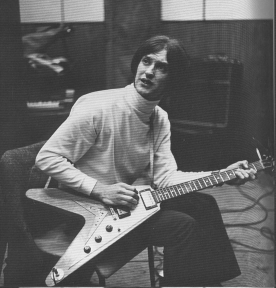
Feb. 3: The Kinks lead guitarist, Dave Davies, is 64 today.


-----
Did you know?

Dave Davies developed the signature distorted power chord riff on The Kinks' first hit, "You Really Got Me" by slitting the speaker cone on his Elpico amplifier, which he then ran through a larger Vox as a "pre-amp."

This sound was one of the first mainstream appearances of guitar distortion, and it went on to influence many guitarist in the future, especially during the Punk rock period.
---
In 2003, Davies was ranked 88th in Rolling Stone magazine list of the "100 Greatest Guitarists of All Time"


-----


In the beginning...

Dave Davies was born in London, England, the last of eight children, including six older sisters and an older brother and Kinks bandmate Ray Davies. As children, the Davies brothers were immersed in a world of different musical styles, from the music-hall of their parents' generation, to the jazz and early rock n' roll of their older sisters.

Davies grew up playing skiffle, but soon bought an electric guitar and started experimenting with rock. The Davies brothers and friend Pete Quaife jammed together in the front room of their house - where the Davies' parents would sing and play piano together.

The front room and the parties their parents threw influenced The Kinks' musical style. Dave and Ray worked on the famous two-note riff of their 1964 hit, "You Really Got Me," on the piano in the front room.

Dave Davies founded The Kinks with Pete Quaife in 1963. His brother Ray, who became the best-known member and de-facto leader of the band, joined soon after at his mother's insistence. The drummer was Ray's friend Mick Avory.

Dave Davies had a turbulent relationship with Avory, one of the reasons behind Mick's departure from the band in the mid 1980s, although the two had been roommates together in the mid 1960s.

Ray and Dave Davies remained the only two steady members of the band, There were a number of different bass players and keyboardists. Dave played a largely subordinate role to his brother, often staying behind the scenes. He'd make occasional contributions on Kinks records as lead vocalist and songwriter, such as "Death of a Clown" and "Strangers."

The Kinks released three albums and several EPs in the next two years. "You Really Got Me" was the group's third released single, after two unsuccessful ones that failed to chart. The single was a massive hit, topping the charts in the U.K. and reaching #7 in the U.S.

Some legendary on-stage fights erupted during this time as well. The most notorious incident was at The Capitol Theatre, Cardiff, Wales in May 1965, involving drummer Mick Avory and Dave Davies. The fight broke out during the second number of the set, "Beautiful Delilah." It culminated with Davies insulting Avory and kicking over his drum set after finishing the first song, "You Really Got Me." Avory responded by knocking down Davies with his Hi-Hat stand, rendering him unconscious. He then fled from the scene, and Davies was taken to Cardiff Royal Infirmary, where he received 16 stitches to the head.

Avory later claimed that it was part of a new act in which the band members would hurl their instruments at each other.

During the late 1960s the group steadily evolved, as Ray's songwriting skills developed and he began to lead the group in a whole new direction. The group abandoned  adopted a more nostalgic, reflective style of music, as showcased on songs like "Autumn Almanac" and "Waterloo Sunset," as well as their albums, such as Something Else by The Kinks and The Village Green Preservation Society.

In July 1967, Davies released his first solo single, credited entirely under his name, (although co-written by his brother) entitled "Death of a Clown." Although credited to Davies, it was technically a Kinks recording, as his backing band was The Kinks.

Upon its release, "Death of a Clown" rose to number three on the UK Singles Chart. Wanting to profit off of the new buzz suddenly surrounding Davies, a solo LP was slated for release some time in 1968 or 1969. The follow-up single, "Susannah's Still Alive," was released in November 1967; however, it only reached #20 on the Melody Maker chart and the solo album release was held back.

The Kinks Are the Village Green Preservation Society and Arthur were released in 1968 and 1969, respectively. Although they received unanimous acclaim, Village Green failed to chart internationally, and Arthur flopped as well.

After Arthur, The Kinks made a comeback with their hit single "Lola" and the accompanying concept album Lola versus Powerman and the Moneygoround, Part One in 1970. Dave recorded two songs of his own for this LP, the acoustic "Strangers" and the hard-rocking "Rats." The rootsy country-rock, and Americana themed Muswell Hillbillies was released in late 1971, and was well-received with critics, but failed to sell.

This pattern of critical acclaim with less than spectacular commercial success continued with the next albums Preservation (Parts One and Two), The Kinks Present A Soap Opera and Schoolboys in Disgrace.

Davies made several attempts at solo albums throughout the '70s, but he never felt enough enthusiasm or interest to see the projects through. He would often act as the producer and engineer at The Kinks' main studio, Konk, in his spare time, producing albums for others.

The Kinks left RCA records in 1977, switching to Arista, and reverted to a five-piece rock group again. Their debut LP for Arista was entitled Sleepwalker, and was a commercial and critical comeback for the group. It was the first album in what critics usually call the "arena rock" phase of the group.

The Kinks reached their commercial peak in the early 1980s. The music video for their early '80s single "Come Dancing" helped hoist the record to #11 on the U.K. charts, and #6 in the U.S - their biggest hit since "Tired of Waiting for You" in 1965.

The Kinks' popularity faltered in 1985, and soon their records ceased to chart altogether. Mick Avory left the band after The Kinks' last album for Arista, Word of Mouth, mainly due to the growing animosity between him and Dave Davies. Ray Davies said that Avory was his best friend in the band and he unwillingly had to choose sides.

(Continued below video and Amazon portals ...)


(Press album cover for direct link to the entire Amazon Website):


The Singles Collection


The group switched to MCA records in late 1985, and began work on their next album, Think Visual. The record was released in 1986, but only reached #81 on the Billboard charts.

The group recorded several more records for MCA, their last studio effort being 1989's UK Jive. UK Jive was received slightly better than Think Visual, but it failed to enter into the Top 100. Dave Davies contributed the song "Dear Margaret" to the record. The group left MCA and struggled to find a record label that would accept them.


All four original members were inducted into the Rock and Roll Hall of Fame in 1990, but this failed to revive their career.
Eventually The Kinks signed with  Columbia records, who released their final studio album together, Phobia, in April 1993. Columbia dropped the group in 1994, forcing them to retreat back to their old Konk Records. The group released To The Bone on the small independent Grapevine records in 1994. The Kinks officially disbanded in 1996.

Dave Davies' solo career was not revived until 1980, with the release of Dave Davies (AFL1-3603), which featured Davies performing all the instruments by himself. The album was named after its own serial number. AFLI-3603 peaked at #42 on the Billboard 200. He went on to release Glamour in 1981, which charted at #152. Davies brought in a back-up band to play with him on this record.  Chosen People was released in 1983, but failed to crack the Billboard 200.


Davies released his first true solo studio album in twenty years, Bug, in 2002. On June 30, 2004, Davies suffered a stroke at Broadcasting House, where he had been promoting Bug. As he exited an elevator, the right hand side of his body seized up and he couldn't move my arm or leg and couldn't speak. By 2006, Davies had recovered enough to be able to walk, talk and play guitar.

Fractured Mindz followed in January 2007, his first album of all new material in nearly five years. It was also his first new studio effort since his stroke.

#####

Feb. 3: Johnny Cymbal - "Ms Bassman" - was born on this date in 1945...


... he was 48 when he died on March 16, 1993.
-----
Did you know?

Johnny Cymbal was not his made-up stage name. At a young age, he was adopted by his mother's second husband, Nick Cymbal, who was a Polish national and a member of the Free Polish Forces stationed in Scotland during World War II. John, who always spoke of Nick as his father, took his surname, and became John Hendry Cymbal.
-----

Johnny Cymbal was born in Ochitree, Scotland and named John Hendry Blair. When Johnny was seven or eight years old, the family moved from Scotland to Goderich, Ontario, Canada, and later to Cleveland, Ohio.

Growing up outside Toronto and then Cleveland, during the genesis of rock and roll, Johnny (who was a fan of, and heavily influenced by, Elvis Presley) became fixated on music and quickly taught himself guitar. He began writing his own songs and singing at the age of 13.

When he was 15, he was discovered by Cleveland music entrepreneur, Sid Lawrence, who brought him to the attention of the well-connected Philadelphia radio personality, Jack Gale. Gale negotiated a recording contract for Cymbal with MGM, and in 1960, at the age of 15, Johnny did his first two sessions, in Nashville, singing his own compositions; "Always Always" and "The Water Was Red." When neither song charted, Johnny's contract option was not picked up by MGM.

At that time, according to Gale, he became both Johnny's manager and legal guardian, and John went to live with Jack Gale and his wife, Lovey, in Philadelphia. John worked in a shoe store as a salesman during this time, while he continued writing songs and Gale sought another recording deal.

Gale was able to get Johnny several one-shot releases on various labels and he soon charted with "Bachelor Man," a demo released in 1963. Kapp gave Johnny an album deal and in December 1962, John recorded his self-penned, "Mr. Bass Man" with Ronnie Bright from The Valentines doing the bass voice.

"Mr. Bass Man," became an instant worldwide smash, going to #16 in the U.S., #1 in Japan and Argentina, Top 5 in England. It was recorded with French lyrics by Henri Salvador and released in France as "Monsieur Boum Boum"; with different french lyrics, it was released as "Monsieur La Basse" by Gilles Brown in Quebec, Canada. "Mr. Bass Man" continues to receive radio airplay and sell records after 40 years.

John was soon signed by The William Morris Agency and began personal appearances throughout the Northeast and then to Europe and Japan after completing his first LP for Kapp. He was 18 years old.

"Dum Dum De Dum," the July 1963 follow-up release to "Mr. Bass Man," did not do well, nor did his next record "Teenage Heaven." The inability to maintain his success was naturally discouraging to Cymbal, who ."..would lock himself in his room for hours."


First and foremost, Johnny Cymbal thought of himself as a songwriter; throughout his life he kept diaries of ideas and notes for future use. By 1966, he devoted his time to songwriting. Although he continued to make records as a singer throughout his career, most of those recordings were released under recording pseudonyms including "Brother John," "Derek," "The Eye-Full Tower," "Dallas" and "The Non-Conformists," among many others.


A prolific composer, Johnny has a catalog of over 200 published songs. in addition to his rock and roll anthem, "Mr. Bass Man," he was responsible for hit records including: "Teenage Heaven," "Cinnamon," "Mary In The Morning," "Rock Me Baby" and "I'm Drinking Canada Dry."


(Press album cover for direct link to the entire Amazon Website):
MR. BASS MAN & OTHER CLASSICS

-----

During his career he wrote alone and with many partners, including: CMA Hall Of Famer Charlie Black; Austin Roberts of "I.O.U." fame; Mark Sameth; multiple CMA award winner Gene Pistilli; Nashville writer David Malloy; Bill Holmes, and Peggy Clinger.

With Michael Rashkow as his co-writer, he penned smash hit and BMI Million Performance Award Winner, "Mary In The Morning." With that song, John attained a lifetime ambition - to have one of his compositions recorded by Elvis Presley.

Cymbal's songs have been recorded by numerous artists inb addition to Elvis: Glen Campbell, Gene Pitney, Al Martino, The Partridge Family, Spencer Davis Group, Frankie Ford, The Flying Burrito Brothers, Eddy Arnold, Ed Ames, Adam Wade, Aaron Tippen, Mike Curb, Jan and Dean, Trini Lopez and David Cassidy, among others.

In 1983, he placed songs on the movie soundtracks of Tender Mercies  starring Robert Duvall and Tough Enough  starring Dennis Quaid.

He died in his sleep of a heart attack on March 16, 1993 at the age of 48.


####
(Continued below video and Amazon portals ...)